Movement assessment · London
Biomechanical Assessment in London
For sport and strength training
We use shoulder and hip measurements, standing analysis and loading tests to identify your movement strategy. The findings explain the relative motion available to you and guide work on how your body decelerates, maintains force and accelerates.
The model behind the assessment
Running, jumping, landing, pushing and pulling all express how your body manages movement and force. At DVOTION, we interpret these actions through three phases of propulsion: deceleration, containment and acceleration. Relative motion availability is central to how we understand each phase, and the full explanation is written up separately.
Read how we interpret movement strategyMeasurements and tests behind your recommendations
We record movement measurements and interpret the pattern alongside standing and loading responses. Each part contributes to the training recommendations.
01Shoulder and hip measurementsRecorded measurements used together to identify your movement strategy.
How we measure it
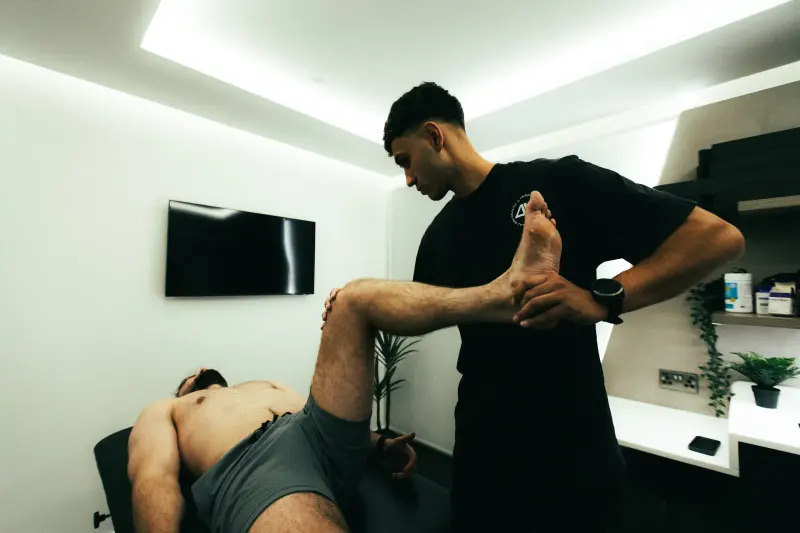
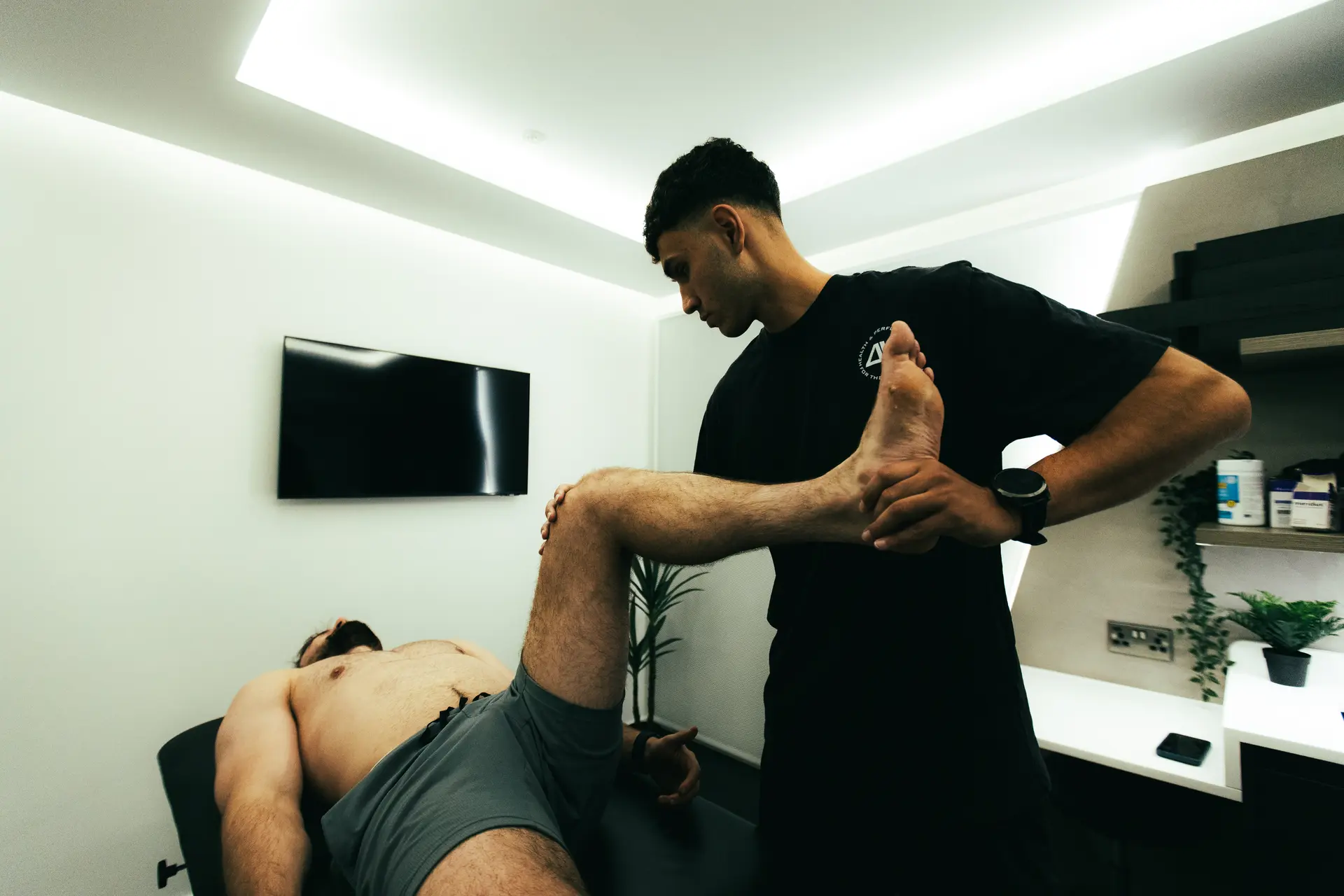
At the table, we measure shoulder and hip motion in positions in front of and behind the centre of gravity, which we call early and late. The relationship between those measurements is the basis for our interpretation.
Why it matters
The pattern helps us identify movement options to develop and choose starting positions for your training.
02Standing strategyHow your body organises itself when standing.
How we measure it
We examine how the strategy identified from the table measurements presents in standing. This is often referred to as posture.
Why it matters
Standing gives the measurements context and helps us consider how you organise your body when supporting your weight.
03Axial compressionHow your body responds to loading.
How we measure it
We apply compression along the body’s axis and examine the response, looking for limitations and compensations.
Why it matters
We use that response to inform the positions and loading demands we would choose in training.
04Reorganisation testsThe movement options you use to complete a task.
How we measure it
We examine how your body changes its organisation to meet the test and where it relies on compensation. These findings are interpreted alongside the measurements and standing strategy.
Why it matters
The findings help us select movement work and coach you to use the options you develop.
Your assessment appointment
Training history and goals
We discuss your sport, training and previous injuries to give the assessment findings context. The measurements and tests establish the movement strategy we work from.
Table assessment
We record shoulder and hip measurements in different positions and interpret the pattern to identify your current movement strategy.
Standing and loading tests
We analyse your standing strategy and use axial compression and reorganisation tests to examine how the pattern presents, where movement is limited and how you compensate.
Interpretation and training priorities
We explain the measurements, how they relate to the other findings and the strategy we identify from them. We then discuss which movement options to develop and what that means for your training.
Written report
You receive a record of the findings, their interpretation and exercise recommendations. You can use the report independently, share it with your coach or continue with DVOTION coaching.

Investment
£300
1 hour · Available now
UNTIL Liverpool Street and UNTIL Marylebone, London.
What you get
Written report
Your assessment findings and training recommendations, with the reasoning behind your exercise priorities.
1:1 consultation on the day
We explain what the findings mean for the movements you want to improve and answer your questions about training.
Training direction
Movement work, exercise selection and a starting point for strength progression, matched to your goals.
After the assessment
Movement Restoration.
The assessment sets the priorities for coaching. We select work aimed at recapturing relative motion, coach you to use the movement options you gain, and build strength while working to retain them. Positions, exercises and progressions follow your assessment and your response to training.
£100 a month
plus £150 for each in-person session
Most people train 1 or 2 sessions a week.
The monthly subscription includes
- Daily online programming written for you
- Manual therapy during your sessions
- Coaching through the sessions
- Adjustments as your movement changes
Collected on the 1st of each month until you cancel, with no minimum term. If you start part-way through a month, the first payment covers only the days up to the 1st. Choose your site when booking. Your session times are then agreed with your coach. If you would rather talk it through first, send an enquiry.
Practitioners
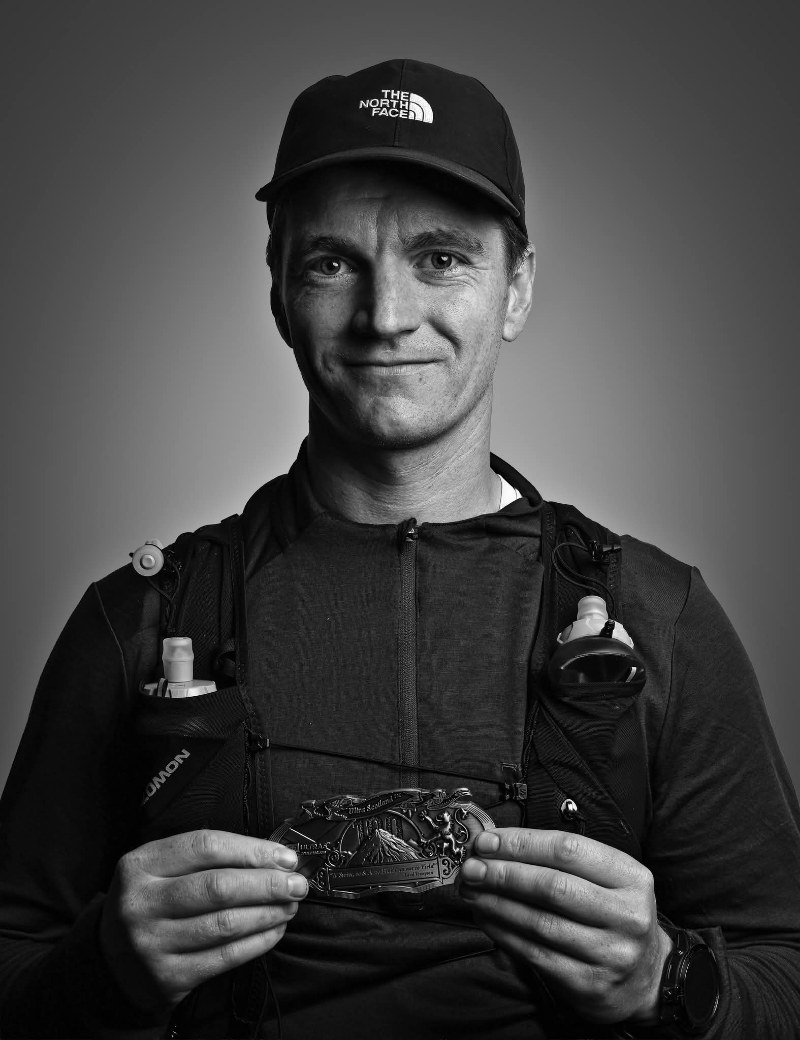
Practitioners running your session.

Founder & Head Coach
Health & Performance Coach
Frequently asked questions
A biomechanical movement assessment examines how your body moves and manages the demands of a task. At DVOTION, Biomechanical Assessment combines recorded shoulder and hip measurements with standing analysis, axial compression and reorganisation tests. We interpret the findings together to identify your movement strategy and recommend priorities for sport and strength training. The one-hour assessment costs £300 and includes a written report.
The assessment identifies your movement strategy and informs the movement and strength work that follows. In our model, jumping, landing and changing direction express the same underlying phases: early propulsion or deceleration, middle propulsion or containment, and late propulsion or acceleration. We interpret the relative motion available across those phases. If you also want measurements of jump braking, propulsion, timing and power, book the combined Movement & Force Production Strategy Assessment. Biomechanical Assessment alone does not measure jump performance or change-of-direction speed.
Running is one expression of the movement strategy we identify from the assessment. In our model, each ground contact involves early propulsion or deceleration, middle propulsion or containment, and late propulsion or acceleration. We interpret how relative motion availability supports these phases and where the body relies on compensation. The findings guide movement and strength work. The session does not include instrumented running gait analysis, sprint timing or a measurement of running economy.
Yes. Shoulder and hip measurements, standing strategy and loading tests help us interpret how you organise your body to control resistance and produce force. The findings inform exercise selection, positioning and progression for pushing, pulling and other strength work. We relate the recommendations to the movements you train and the equipment you use.
It can be useful if a recurring movement restriction is affecting your training and you want to understand what to work on next. We interpret the measurement pattern alongside standing and loading responses to consider which movement options are available and which compensations you rely on. This gives your mobility and strength work a direction based on the assessment.
We record shoulder and hip measurements at the table in early and late positions. In our terminology, early refers to positions in front of the centre of gravity and late refers to positions behind it. We interpret the measurements together, then analyse standing strategy and use axial compression and reorganisation tests to examine limitations and compensations. The assessment includes both recorded measurements and practitioner interpretation.
Relative motion is movement between body segments, such as the thigh and pelvis. In our assessment model, that availability allows energy to transfer through the body during deceleration, containment and acceleration. When relative motion is restricted, segments may move together as a unit and the body may reorganise to complete the task through compensation. We interpret the measurements together to identify that strategy. A larger range can include compensation elsewhere, so no single angle determines your training plan.
You receive a written report explaining the findings, your movement strategy and recommended training priorities. We discuss the findings during the appointment, including which movement options to develop and how to approach strength work. The report can be used independently or shared with your existing coach.
Biomechanical Assessment is £300 and helps guide movement work and exercise selection. The Force & Power Profile is £150 and measures braking, propulsion, timing, power and limb contribution during force plate protocols. The Movement & Force Production Strategy Assessment combines both for £400, with the findings interpreted together. Choose the combined assessment if you want movement recommendations alongside measured force and jump data.
Yes. You can book Biomechanical Assessment on its own. If you continue with DVOTION coaching, we work on recapturing relative motion, using the movement options you gain and progressively building strength while retaining them. A full ongoing programme is a separate service.
Previous injuries and recurring movement limitations can be discussed as part of your training history. This is a performance assessment, not a diagnosis of injury or the medical cause of pain. An active injury requiring medical attention should be assessed by an appropriate healthcare professional.
DVOTION Labs offers Biomechanical Assessment at UNTIL Liverpool Street, 280 Bishops Square, London EC2M 4RB, and UNTIL Marylebone, 1 Orchard Street, London W1H 6HJ. Both locations operate by appointment.
- Duration
- 1 hour
- Price
- £300
- Locations
- Liverpool Street · Marylebone
- Methodology
- Table measurements and strategy analysis
- Format
- 1:1 assessment, written report
Who this is for
- Athletes working on landing control, push-off or changes of direction
- People whose movement restrictions keep returning during training
- People who want movement and strength work to support their pushing and pulling exercises
- Athletes planning a training block and wanting clear exercise priorities
- Athletes returning to training after appropriate injury care
Who it isn't for
- Anyone seeking diagnosis or treatment of a medical condition — this is an assessment, not clinical care
- Athletes wanting a session of corrective exercise rather than an assessment and direction
Give your movement and strength work a clear direction.
Book a biomechanical assessment at Liverpool Street or Marylebone and receive training priorities for your sport, explained in a written report.
Book Biomechanical Assessment