Integrated assessment · London
Complete Athlete Profiling in London
Bring every part of your performance together and turn the results into clear priorities for your training.
Complete Athlete Profiling assesses the different physical and physiological qualities that contribute to your performance rather than looking at one measurement in isolation.
- Price
- £800
- Duration
- Two appointments
- Locations
- Liverpool Street · Marylebone
Training zones, fuelling, hydration, movement and force.
We measure your aerobic and endurance physiology to establish training intensities, your resting metabolic rate to provide a baseline for energy requirements, your sweat response to inform hydration, your movement strategy to guide exercise selection, and your force and power characteristics to understand the physical qualities you produce. The value comes from interpreting these results together. You leave with individual training zones, nutrition and hydration targets, movement and exercise considerations, and clear priorities for what your training should focus on next.
01Resting metabolic rateA measured resting energy expenditure rather than one predicted from age, height, weight and sex, and the starting point for estimating your daily requirement.
How we measure it
Resting energy expenditure measured by indirect calorimetry, taken at the start of the second appointment while the overnight fast remains intact. It precedes every other measurement, since any preceding activity would alter the result.
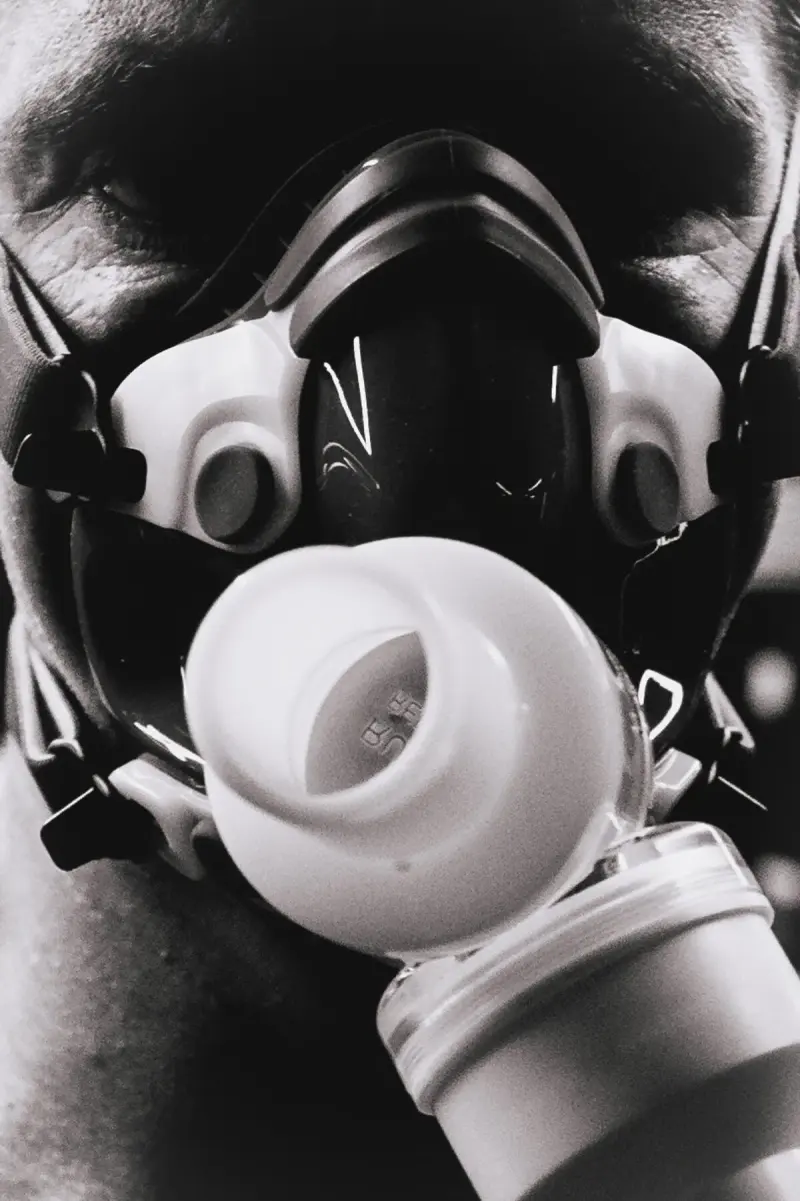
02VO₂ max and blood lactateVO₂ max, both ventilatory thresholds, both lactate thresholds and the full curve, measured maximum heart rate, peak ventilation, estimated fuel use across exercise intensities, and training zones in heart rate and your own pace or power.
How we measure it
Two tests, approximately 90 minutes. A progressive blood lactate profile in three-minute stages at a 1% gradient with a capillary sample after each, then fifteen minutes of recovery, then a separate maximal test in which speed rises by 1 km/h every minute while expired oxygen and carbon dioxide are analysed.
03Movement strategyThe movement options currently available to you and the strategy you rely on, which is what makes the force data interpretable rather than merely recorded.
How we measure it
A structured assessment of how you organise your body under load, covering the positions you can access, where relative motion is available or restricted, and how pressure is managed across a range of tasks. It is conducted at the first appointment, in the fed and unfatigued state.
04Force production under a time constraintHow the strategy above holds up when you have a fraction of a second to organise yourself and produce an outcome.
How we measure it
Hawkin Dynamics force-plate protocols recording braking and propulsion, impulse, time to take-off, velocity, power and the contribution of each limb. They are conducted within the same assessment as the movement work, so that the two sets of findings are interpreted together rather than reported alongside one another.
05Sweat and hydrationSweat rate, sweat sodium concentration and total sodium loss per hour, and a hydration and electrolyte strategy built from them.
How we measure it
A steady-state session of 45 to 60 minutes at an intensity relevant to your event, using FLOWBIO S1 to assess sweat rate and sodium concentration, interpreted alongside the session conditions and available fluid-balance information. It follows the movement and force-plate work in the first appointment, which is where you are already fed and rested.
06Priorities for the next blockWhere the four areas agree, and where they do not.
How we measure it
Drawn from reading the data sets against each other rather than in isolation.
Why it matters
Disagreement between areas is usually where the clearest opportunity sits, which is what the report leads with.
07Your KPIsThe two or three measures worth tracking for you.
How we measure it
Selected from the full data set against the demands of your sport.
Why it matters
Lets later testing be targeted rather than repeated wholesale, so a reassessment measures change rather than describing your physiology again.
08Your reportOne report written across the areas, not four collected together.
How we measure it
An integrated summary, then the metabolic, movement and force sections in full, with interpretation of what each measure is useful for.
Why it matters
Closes with priorities, KPIs and a recommended interval before retesting. It describes your current profile and sets priorities; it does not diagnose injury or guarantee that injury will be avoided.

Everything we measure, in an order chosen so each part is recorded under the conditions that make it meaningful, written up as one interpretation rather than six reports.
Measured with
- KORR CardioCoach MAX for expired gas analysis
- ARKRAY Lactate Pro 2, fingertip sample analysed at every stage
- Hawkin Dynamics force plates, jump and force protocols
- Movement strategy assessment against a structured model
The four assessments run across two appointments, grouped around their preparation and testing requirements. You select the date of the first appointment at checkout and arrange the second from your account.
Appointment 1 · Movement, force and sweat
First visitEat and drink normally. Avoid heavy lower-body training for the preceding 48 hours, since residual fatigue reduces the force values recorded. Bring the clothing and footwear you train or compete in.
- A consultation covering your training history, your current training load, any injury history, and the questions you want the profile to address.Consultation
- The Biomechanical Assessment, including the Hawkin Dynamics force-plate protocols. The movement work is filmed so the findings can be reviewed against the footage, and the force plates record force production and absorption, impulse, time to take-off, velocity, power and the contribution of each limb. The movement and force findings are interpreted together to guide your training.Assessment
- The sweat and hydration session. A steady-state effort at an intensity relevant to your event, using FLOWBIO S1 to assess sweat rate and sodium concentration, interpreted alongside the session conditions and available fluid-balance information.Assessment
Appointment 2 · Metabolic and endurance
Second visitAn overnight fast of at least ten hours. Water only, no caffeine, and no training on the preceding day. You have a small snack after the resting measurement and before the endurance testing.
- Resting energy expenditure measured by indirect calorimetry. It is taken before anything else, while the overnight fast remains intact, since any preceding activity would alter the result.Preparation
- A small snack, then setup for the endurance testing. The snack is part of the protocol: it is kept small and consistent so everyone is tested under the same nutritional condition, and so nobody runs a maximal effort at the end of a twelve-hour fast.Preparation
- A progressive blood lactate profile in three-minute stages at a 1% gradient with a capillary sample after each, fifteen minutes of recovery, then a separate maximal test with speed rising 1 km/h every minute.Endurance testing
Choosing
Complete profile or a single assessment.
About 90 minutes · Aerobic physiology and blood lactate. Pacing, thresholds and training intensity.
1 hour · Movement strategy alone. How you organise load and what shapes your restrictions.
1 hour · Force production alone. How force is produced and distributed.
- Complete Athlete ProfilingThis one£800
Two appointments · All four of the above, across two appointments, interpreted against one another in one report.
If your question is entirely about pacing and training intensity, the Endurance Performance Profiling answers it at £240. Choose the complete profile when you want the relationships between the areas, not simply more measurements. The sweat and hydration session takes place during the first visit, after the movement and force assessments.
Athletes with a question spanning more than one area.
Suited to
- Athletes with a performance question that spans physiology, movement and force production
- Athletes establishing a broad baseline before a significant training block
- Those who want strength and endurance priorities set from the same session
- Athletes whose progress has flattened without an obvious cause in any single area
- Athletes returning to structured training after an extended interruption
Less suited to
- Anyone whose question is answered by one assessment: book that one
- Athletes not currently training to a structure, as there is little to apply the priorities to
- Anyone seeking a clinical diagnosis, which this assessment does not provide
- Anyone unable to commit three hours in a single appointment
This assessment is not suitable for everyone, and we would rather say so before you book than afterwards. If a single assessment answers your question, book that instead.
More on what each area shows.
Questions we get asked.
Because you want the areas read against each other. If your question is only about pacing and training intensity, the Endurance Performance Profiling at £240 answers it and costs less. The pack suits athletes whose question spans more than one area, where a movement or force finding explains something the physiology on its own does not.
Complete Athlete Profiling costs £800 at DVOTION Labs in London. It covers resting metabolism, endurance, movement, force and power, and sweat and hydration across two appointments, with one written report. The pack costs £125 less than booking its four component assessments separately.
Complete Athlete Profiling suits athletes with a specific performance question and the intention to act on the answer over a training block. If you are not currently training to a structure, or want a single measurement, a shorter assessment is the more sensible choice.
No. It is a performance assessment, not a clinical examination. It does not diagnose injury, and it does not guarantee that injury will be prevented. Findings describe how you currently produce and organise movement and force. If something in the assessment warrants clinical attention, we will say so and recommend you see an appropriate professional.
Not by itself. Differences between limbs are common and frequently reflect the way an athlete organises a task, their sport, or their training history. What matters is whether a difference is consistent across protocols, whether it aligns with the movement findings, and whether it changes over time. It is interpreted in context rather than treated as a defect.
Two appointments. The first covers the Biomechanical Assessment including the force-plate work, then the sweat and hydration session, with you fed and unfatigued throughout. The second begins with the resting metabolic rate while the overnight fast is intact, then a small snack, then the endurance testing. The assessments are grouped so each one is done under the preparation and testing conditions it requires. You pay once, choose the date of the first appointment at checkout, and arrange the second from your account.
It depends on the assessment, which is the reason they are on separate days. Resting metabolic rate needs an overnight fast: nothing but water, no coffee, and no training the day before. The endurance testing follows in the same appointment after a small snack, so you arrive fasted for the resting measurement and are not asked to run a maximal effort on an empty stomach. Movement strategy, the force plates and the sweat session all want you eating normally, and the force plates want you unfatigued rather than fasted. Each booking tells you which applies, and your confirmation repeats it.
Typically after a full training block, at 12 to 16 weeks or longer. Because this establishes a broad baseline, many athletes retest a single area sooner and return to the full profile annually or before a significant training phase.
DVOTION Labs offers Complete Athlete Profiling at UNTIL Liverpool Street, 280 Bishops Square, London EC2M 4RB, and UNTIL Marylebone, 1 Orchard Street, London W1H 6HJ. Both locations operate by appointment.
Book Complete Athlete Profiling.
- Price
- £800
- Duration
- Two appointments
- Locations
- Liverpool Street · Marylebone
Where
- UNTIL Liverpool Street280 Bishops Square, London EC2M 4RB
- UNTIL Marylebone1 Orchard Street, London W1H 6HJ
Both sites operate by appointment. Your location is selected when you book.
Not sure which assessment answers it?
Describe what you want to understand and we will tell you which one answers it.