
Metabolic testing · London
Resting Metabolic Rate Testing in London
Measure how much energy your body uses at rest and use it as the starting point for your nutrition.
Resting Metabolic Rate testing measures the energy your body requires to maintain basic physiological function at rest. Instead of relying solely on a calorie calculator, your resting energy expenditure is measured using indirect calorimetry.
- Price
- £135
- Duration
- 1 hour
- Locations
- Liverpool Street · Marylebone · Canary Wharf
Resting energy expenditure, in kcal per day.
This gives you an individual baseline that can be combined with your daily activity and training demands when estimating your overall energy requirements. It provides a more informed starting point for fuelling your training, supporting changes in body composition or reviewing whether your current energy intake matches your goals.
01Measured resting energy expenditureYour resting expenditure in kcal/day: measured, not predicted.
How we measure it
The resting protocol records oxygen uptake while you remain settled and still. The energy calculation uses a standard respiratory quotient.
Why it matters
It removes the largest single source of error from a nutrition plan, because resting expenditure is usually the biggest share of the daily total.
02Comparison against predictionHow your measured value differs from what an equation assumes.
How we measure it
Your result is set against what a standard prediction equation would produce for someone of your height, weight, age and sex.
Why it matters
A value well above or below prediction is worth understanding. It may reflect body composition, a sustained period of low intake, or high training load. The measurement identifies the discrepancy; interpreting the cause requires context, and sometimes a clinician.
03Measurement conditionsThe preparation and resting conditions recorded with your result.
How we measure it
Your resting result is recorded alongside the test conditions. An assumed respiratory quotient is used in the calculation rather than reported as a measured result.
Why it matters
Consistent preparation helps you compare repeat measurements. Resting fat and carbohydrate use are not reported from this protocol.
04Estimated daily expenditureYour measured resting value plus estimated activity and training.
How we measure it
Activity and training expenditure are estimated, not measured, and presented with the assumptions used to arrive at them.
Why it matters
Presented as a range rather than a single number, because only one component of it was measured.
05Nutrition starting pointsIntake ranges for maintenance, reduction or increase.
How we measure it
Derived from the measured resting value rather than a population equation.
Why it matters
A deficit set against a measured value is more likely to be the size intended. One set against an over-estimated requirement is larger than planned, which is a common reason a plan becomes unsustainable.
06Your reportMeasured and estimated figures separated on every page.
How we measure it
Your measured RMR with the conditions it was recorded under, the comparison against what an equation would have predicted, the estimated components of your daily total, and your starting ranges.
Why it matters
Includes guidance on how to review and adjust the ranges. A repeat measurement after a period of changed intake or training shows whether resting expenditure has moved, which prediction equations cannot show. Delivery timing is confirmed at the appointment.
Intake figures are starting ranges, adjusted over subsequent weeks against measured change in body mass and how training is tolerated. No intake figure is fixed, and this measurement does not promise a change in body composition.
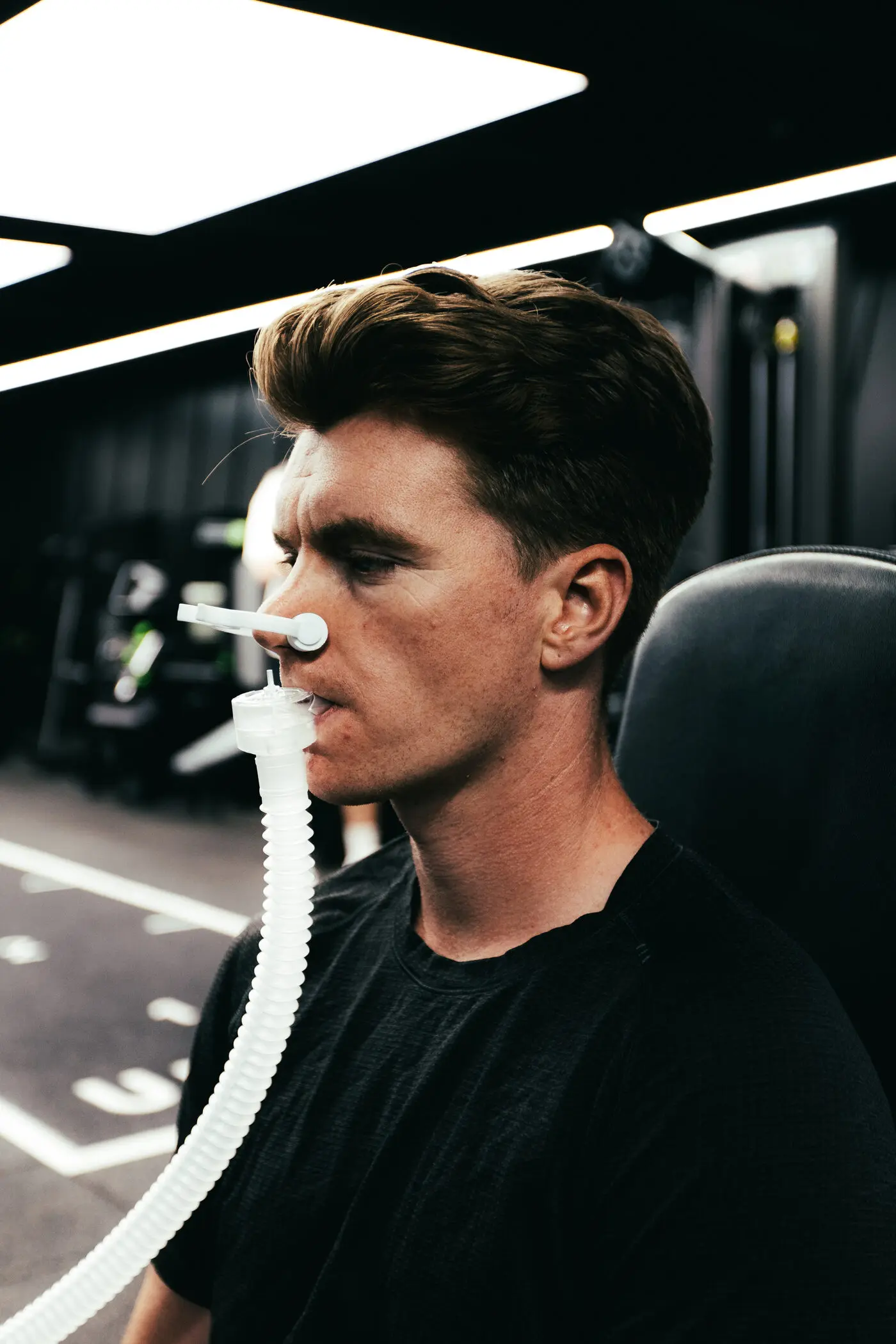
Measured by indirect calorimetry while you lie still, not predicted from your height, weight and age.
Measured with
- KORR CardioCoach MAX, indirect calorimetry
- Breathing mask and nose clip, expired gases analysed throughout
The measurement needs you settled and still, so the appointment is unhurried by design.
- 01ArrivalPreparation confirmed and body mass recorded. If the protocol was not followed we will say so rather than take an unreliable result.
- 02SettlingYou rest quietly so breathing and heart rate settle. Measuring too early gives an elevated result.
- 03MeasurementYou lie still and breathe normally while gas exchange is recorded. No exertion at any point.
- 04ReviewYour measured value against prediction, and the estimated components, with the difference made explicit.
- 05ReportThe measured result, the estimates and the recommended starting points.
Athletes managing intake, body composition or a deficit.
Suited to
- Anyone whose body composition makes a prediction equation unlikely to be accurate
- Athletes adjusting intake across training phases
- Anyone who has spent a long period in an energy deficit and wants a current measurement
- People preparing for a physique-based event
- Athletes with high training volumes whose resting expenditure is difficult to predict
- Anyone who wants a measured starting point rather than a calculated assumption
Less suited to
- Anyone unable to follow the fasting and rest protocol, as the result will not be reliable
- Anyone seeking a diagnosis of a metabolic or endocrine condition: this is not a clinical diagnostic test
- Anyone expecting a single exact daily calorie figure, which this measurement cannot produce
If you want a full nutrition plan rather than the measurement it would be built from, a Sports Nutrition Consultation is the more appropriate service.
Questions we get asked.
Resting Metabolic Rate testing costs £135 at DVOTION Labs in London. The 1 hour appointment includes the resting measurement, a discussion of your result and a written report. Your report distinguishes resting energy expenditure from estimates of your daily energy needs.
Follow the fasting and stimulant instructions sent when you book. Digestion and caffeine both raise resting expenditure, so an unprepared measurement is not worth taking. Arrive rested, without exercising beforehand, and allow time to settle before the measurement begins. Stay still and quiet throughout; talking or moving affects the reading.
Resting metabolic rate is included in Complete Athlete Profiling. It is measured at the start of the metabolic and endurance appointment, before food or exercise. Follow the preparation instructions for each visit. RMR is not included in the standalone VO₂ Max Test or Endurance Performance Profiling.
The energy your body expends at complete rest to maintain basic function: respiration, circulation, temperature regulation and organ activity. It is measured here rather than predicted from height, weight and age.
No, and the distinction matters. RMR is the measured resting component only. Total daily energy expenditure also includes activity, training and the energy cost of digestion, none of which are measured by this test. Those are estimated separately, which means any total daily figure is an estimate built on a measured foundation rather than a measured number itself.
By indirect calorimetry. The resting protocol records oxygen uptake while you rest. Resting energy expenditure is calculated using a standard respiratory quotient; your individual respiratory quotient is not measured in this protocol.
It will not produce an exact figure, and any service claiming to would be overstating what the method can do. What it produces is a measured resting value, which removes the largest source of error from the calculation. Activity and training expenditure still have to be estimated, so a calorie target derived from the result remains a starting point that is adjusted against how your body responds.
The resting protocol records oxygen uptake and applies a standard respiratory quotient. It does not measure your resting fat and carbohydrate use. Exercise gas analysis is a separate protocol in the VO₂ Max Test.
No. A measurement can sit above or below a predicted value for many reasons, including body composition, recent energy intake, training load and normal individual variation. A single result describes your resting expenditure on that day under those conditions. It does not diagnose a condition, and it should not be read as one.
No. The measurement is equally valid for anyone. It tends to be most useful for people whose resting expenditure is unlikely to match a prediction equation: those with higher or lower muscle mass than average, those who have spent a long period in an energy deficit, and athletes with high training volumes.
Allow an hour for the appointment. The measurement itself takes 20 to 30 minutes, with the rest of the time for settling beforehand and going through your result with you afterwards.
DVOTION Labs offers testing at UNTIL Liverpool Street, 280 Bishops Square, London EC2M 4RB; UNTIL Marylebone, 1 Orchard Street, London W1H 6HJ; or UNTIL Canary Wharf, 30 South Colonnade, London E14 5HX. All three operate by appointment.
Book resting metabolic rate testing.
- Price
- £135
- Duration
- 1 hour
- Locations
- Liverpool Street · Marylebone · Canary Wharf
Where
- UNTIL Liverpool Street280 Bishops Square, London EC2M 4RB
- UNTIL Marylebone1 Orchard Street, London W1H 6HJ
- UNTIL Canary Wharf30 South Colonnade, London E14 5HX
All three sites operate by appointment. Your location is selected when you book.
Ask about RMR testing.
If you are not sure whether a measured resting value would change what you are currently doing, send an enquiry and we will tell you honestly.